History and Architecture of Esna Temple
The temple, as it stands today, primarily dates from the Ptolemaic and Roman eras, with construction and decoration spanning from approximately 40 AD to 250 AD. Roman emperors such as Claudius, Trajan, and Hadrian contributed to its embellishment, reflecting the continued importance of Egyptian deities even under Roman rule [1].
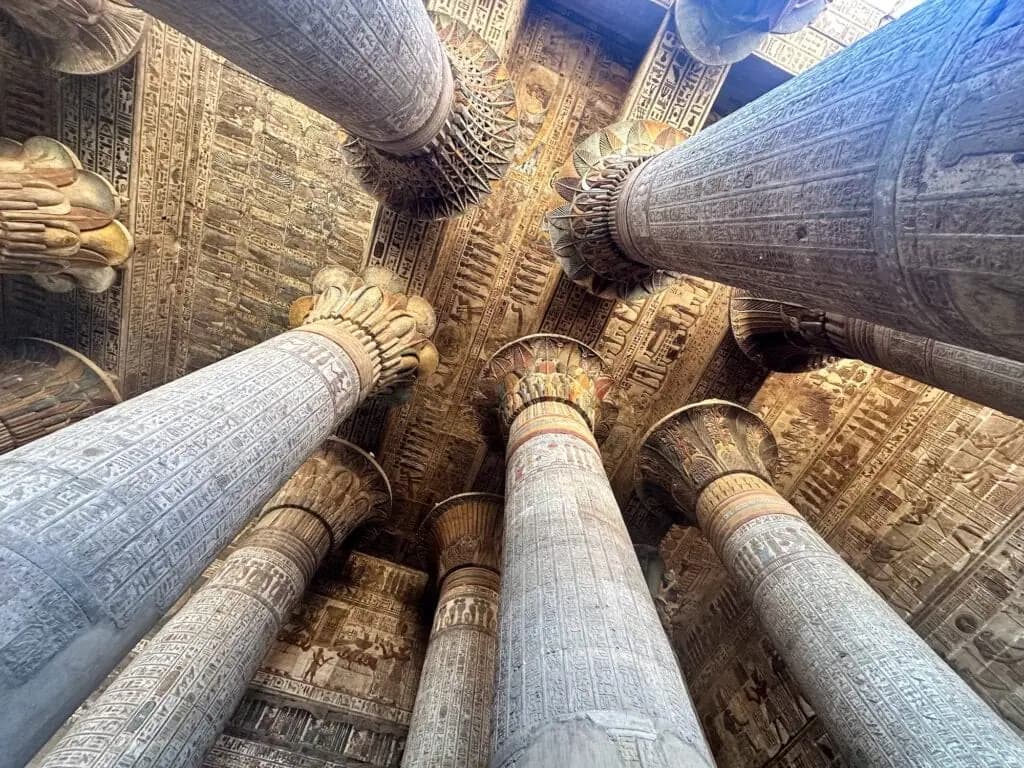
One of the most striking features of Esna Temple is its grand hypostyle hall, which is the only part of the temple that has been fully excavated and is visible today. This hall is supported by 24 columns, each adorned with intricate and beautifully preserved reliefs and hieroglyphs. These carvings depict various scenes, including Roman emperors making offerings to Egyptian gods, astronomical representations, and detailed texts that provide valuable information about the temple rituals and the deities worshipped there.
The God Khnum
Esna Temple is primarily dedicated to Khnum, the creator god who was believed to have fashioned humans on his potter's wheel. He is often depicted with the head of a ram. The temple also honors other deities, including his consorts Menhit and Nebtu, their son Heka, and the goddess Neith.
Visiting Esna Temple
Unlike many other ancient Egyptian temples that stand at ground level, the hypostyle hall of Esna Temple is situated several meters below the modern street level. This is due to centuries of Nile flooding and subsequent settlement building on top of the ancient site. Visitors descend a staircase to enter the temple, which adds to the sense of discovery and immersion in history.
The vibrant colors of some of the reliefs are still visible, offering a rare opportunity to see ancient Egyptian art as it would have appeared thousands of years ago. The detailed carvings and inscriptions make it a fascinating site for those interested in the religious and cultural aspects of ancient Egypt during its later periods.
Tailored Egypt Travel Experience at Esna Temple
Tailored Egypt Travel offers exclusive tours that include a visit to the captivating Esna Temple. With expert Egyptologist guides, travelers can gain a deeper understanding of the temple's history, its intricate carvings, and its significance in ancient Egyptian religion. A visit to Esna Temple provides a unique and enriching experience, complementing the more well-known sites and offering a comprehensive view of Egypt's diverse archaeological heritage.