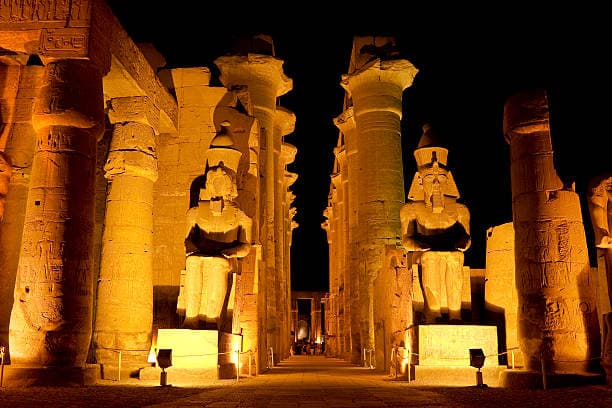
Luxor Temple : is an ancient Egyptian temple complex located on the east bank of the Nile River in the city of Luxor, which was known as Thebes in ancient times. It is one of the most well-preserved temples in Egypt and is renowned for its architectural grandeur, historical significance, and religious importance.
Here is a comprehensive explanation of Luxor Temple:
- History: Luxor Temple was constructed over several centuries, with various pharaohs adding to its structure. Its construction began during the reign of Amenhotep III in the 14th century BCE and continued through the reigns of Tutankhamun, Horemheb, and Ramses II, among others. The temple was dedicated primarily to the god Amun, but other deities, including Mut and Khonsu, were also worshipped there.
- Purpose: Luxor Temple served as a religious center for festivals and ceremonies honoring the gods, particularly Amun. It was also a site for the annual Opet Festival, during which the divine image of Amun would be transported from the nearby Karnak Temple to Luxor Temple along the avenue of sphinxes that once connected the two temples.
- Architecture: The temple complex is designed in the typical Egyptian temple layout, consisting of a series of courtyards, halls, and chambers. The entrance is marked by a massive pylon (a monumental gateway), flanked by towering statues of Ramses II. Beyond the pylon is the first courtyard, followed by the colonnaded courtyard, which features rows of towering columns with papyrus-bud capitals. The Hypostyle Hall, with its massive columns and intricate reliefs, leads to the inner sanctuaries where the cult statues of the gods were housed.
- Art and Inscriptions: Luxor Temple is adorned with intricate reliefs, carvings, and hieroglyphic inscriptions that depict scenes from ancient Egyptian mythology, history, and religious rituals. These decorations include depictions of pharaohs making offerings to the gods, battles, processions, and divine scenes.
- Restoration and Preservation: Over the centuries, Luxor Temple suffered damage from natural disasters, including earthquakes and floods, as well as human activity. However, extensive restoration and preservation efforts have been undertaken since the early 19th century to protect and conserve the temple complex. These efforts have helped maintain Luxor Temple as one of the most important archaeological sites in Egypt.
- Tourism: Luxor Temple is a UNESCO World Heritage Site and is a popular tourist destination, attracting visitors from around the world who come to marvel at its ancient splendor and learn about Egypt's rich history and culture. It is often visited along with other nearby attractions such as Karnak Temple, the Valley of the Kings, and the Valley of the Queens.
In summary, Luxor Temple is a magnificent testament to ancient Egyptian civilization, with its impressive architecture, rich symbolism, and historical significance providing insight into the religious beliefs and cultural practices of the time. It stands as a reminder of Egypt's glorious past and continues to awe and inspire visitors to this day.