Introduction
The Abu Simbel Temples are among Egypt's most breathtaking ancient monuments, but few visitors realize they almost disappeared forever. In the 1960s, the construction of the Aswan High Dam threatened to submerge these incredible temples beneath the rising waters of Lake Nasser. What followed was one of the greatest archaeological rescue missions in history—a remarkable international effort that preserved a priceless piece of human heritage for future generations.
Why Were the Temples in Danger?
The Abu Simbel Temples were built more than 3,200 years ago during the reign of Pharaoh Ramses II. Carved directly into a sandstone cliff in southern Egypt, they stood safely on the banks of the Nile for centuries.
Everything changed when Egypt began building the Aswan High Dam. While the dam promised reliable irrigation, flood control, and hydroelectric power, it also created Lake Nasser, one of the largest artificial lakes in the world. As the water level rose, many ancient Nubian monuments—including Abu Simbel—were at risk of disappearing beneath the lake forever.
A Global Rescue Mission
Recognizing the importance of these monuments, UNESCO launched an international campaign in 1960 to save the temples. More than 50 countries contributed financial support, technical expertise, and engineering skills, making it one of the largest cultural preservation projects ever undertaken.
Rather than allowing the temples to flood, engineers developed an extraordinary solution: move them to higher ground.
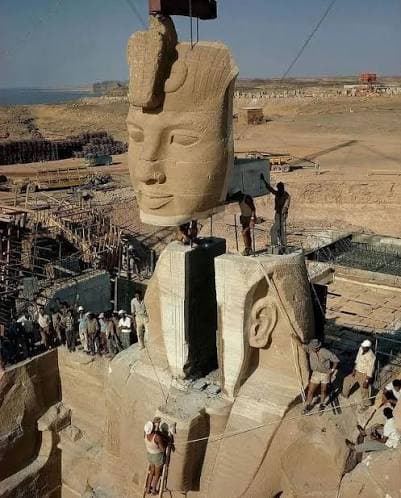
Moving an Ancient Wonder
The rescue operation began in 1964 and took four years to complete.
Instead of relocating the temples in one piece, engineers carefully cut them into more than 1,000 large stone blocks, each weighing up to 30 tons. Every block was numbered, lifted, and transported about 65 meters (213 feet) higher and around 200 meters (656 feet) away from the original location.
Once moved, the blocks were reassembled with incredible precision, recreating the temples almost exactly as they had stood for thousands of years. The seams between many of the blocks are barely visible today.
Preserving the Original Design
One of the greatest achievements of the project was maintaining the temples' original orientation. The famous solar phenomenon—when sunlight reaches the sanctuary and illuminates the statues of Ramses II and the gods twice each year—was preserved with only a slight difference of about one day from the original dates.
Engineers also built an artificial hill around the relocated temples, giving visitors the impression that they are still carved naturally into the mountainside.
Why the Rescue Matters
Saving Abu Simbel was about much more than protecting two ancient temples. The project became a symbol of international cooperation and proved that countries could work together to preserve the world's cultural heritage.
The success of the campaign also inspired future UNESCO conservation projects and helped shape modern approaches to protecting historic monuments around the globe.
Visiting Abu Simbel Today
Today, millions of visitors travel to Abu Simbel every year to admire the colossal statues of Ramses II and the beautifully decorated temple dedicated to Queen Nefertari. Standing before these remarkable monuments, it's hard to imagine that they were once carefully dismantled and rebuilt stone by stone.
The temples remain one of Egypt's greatest engineering and archaeological success stories, reminding us that preserving history is a responsibility shared by the entire world.
Conclusion
The rescue of the Abu Simbel Temples is one of the most extraordinary achievements in modern archaeology. Thanks to the determination of Egypt, UNESCO, and dozens of countries, this ancient masterpiece was saved from the rising waters of Lake Nasser and continues to inspire visitors from around the world. Today, Abu Simbel stands not only as a tribute to the genius of ancient Egyptian builders but also as a lasting symbol of what humanity can accomplish when it works together to protect its shared heritage.