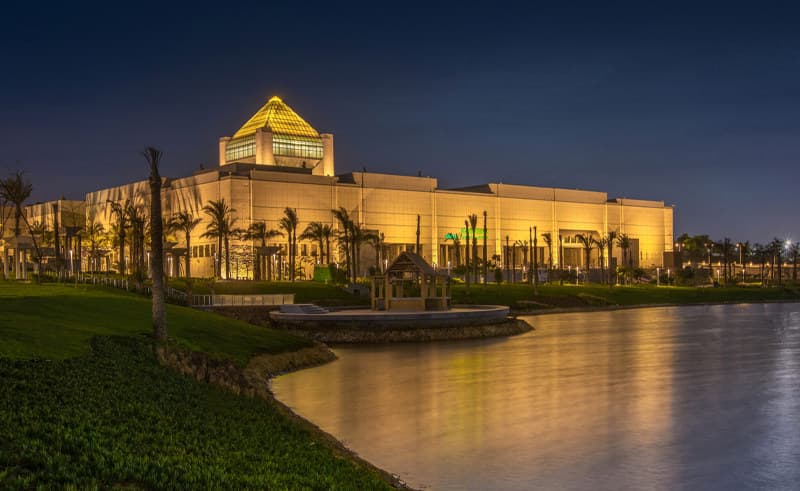
Officially inaugurated in 2021, the museum has quickly become one of Egypt's premier attractions, combining world-class exhibitions, innovative technology, and outstanding architecture to showcase the richness and continuity of one of the world's oldest civilizations.
A Museum Unlike Any Other
Unlike traditional museums that focus on a single historical period, NMEC presents the entire history of Egypt under one roof. Its collection includes more than 50,000 artifacts, illustrating the country's development through the prehistoric, Pharaonic, Greco-Roman, Coptic, Islamic, and modern periods. The museum emphasizes how Egyptian civilization has evolved while maintaining a remarkable cultural continuity across thousands of years.
The Royal Mummies Hall
The museum's most famous attraction is the Royal Mummies Hall, home to the mummies of 22 ancient Egyptian kings and queens, including some of the greatest rulers in history.
Displayed in a carefully designed environment that recreates the atmosphere of a royal tomb, the gallery uses modern technology to explain the science of mummification, ancient religious beliefs, and the lives of Egypt's most celebrated pharaohs. The respectful presentation allows visitors to appreciate both the historical importance and the human stories behind these remarkable rulers.
The Pharaohs' Golden Parade
NMEC gained worldwide attention on 3 April 2021, when it became the final home of the royal mummies following the spectacular Pharaohs' Golden Parade. During this historic event, 22 royal mummies were transported from the Egyptian Museum in Tahrir Square to NMEC in a carefully organized procession watched by millions around the world.
The parade celebrated Egypt's rich heritage while introducing the museum as one of the country's leading cultural institutions.
Permanent Galleries
The museum features beautifully designed galleries that explore every stage of Egyptian civilization through both chronological and thematic displays.
Visitors can discover exhibitions dedicated to:
The dawn of civilization.
The importance of the Nile River.
The development of writing.
Ancient Egyptian society and government.
Religious beliefs and funerary traditions.
Daily life, arts, crafts, and technology.
Coptic, Islamic, and modern Egyptian heritage.
Interactive displays, multimedia presentations, and carefully selected artifacts make the museum engaging for visitors of all ages.
Modern Architecture and Facilities
Built on a spacious site overlooking Ain El-Sira Lake in Fustat, NMEC combines modern architectural design with elements inspired by Egypt's ancient heritage. In addition to its exhibition halls, the museum includes conservation laboratories, research facilities, a theater, lecture halls, temporary exhibition spaces, restaurants, cafés, and gift shops, making it a vibrant cultural center as well as a museum.
Why Visit NMEC?
The National Museum of Egyptian Civilization offers an experience unlike any other museum in Egypt. Rather than focusing solely on the age of the pharaohs, it tells the complete story of Egypt's continuous civilization over thousands of years.
Its thoughtful exhibitions, outstanding collection, modern presentation techniques, and the world-famous Royal Mummies Hall make it one of the country's essential attractions for history lovers, students, and travelers alike.
A Celebration of Egypt's Enduring Legacy
The National Museum of Egyptian Civilization is more than a museum—it is a celebration of Egypt's remarkable cultural journey. From prehistoric communities to the achievements of the ancient pharaohs and the richness of Coptic, Islamic, and modern heritage, NMEC presents the story of a civilization that has shaped human history.
Whether you are visiting Egypt for the first time or returning to deepen your understanding of its past, NMEC offers an unforgettable experience that brings more than 7,000 years of history to life.