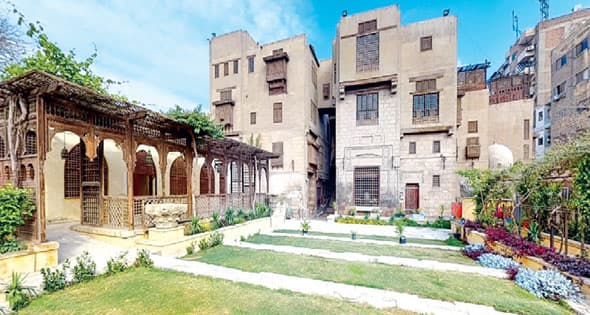
The History of Beit El-Kretliya
The museum consists of two beautifully preserved houses built during the Ottoman period. The older house dates back to 1540, while the second was constructed in 1632. In the 18th century, one of the houses was owned by a wealthy woman from the island of Crete, known locally as "El-Kretliya" (meaning "the Cretan woman"), giving the residence its famous name.
In the 1930s, the British army officer and collector Major Robert Grenville Gayer-Anderson obtained permission to live in the houses. He carefully restored the buildings and filled them with an impressive collection of Islamic art, Persian carpets, antique furniture, ceramics, manuscripts, weapons, textiles, and treasures gathered from across the Middle East, North Africa, and Asia.
When he left Egypt in 1942, Gayer-Anderson donated the entire collection to the Egyptian government, and the house was transformed into a museum that still bears his name.
A Masterpiece of Ottoman Architecture
Beit El-Kretliya is widely regarded as one of the finest examples of traditional Ottoman residential architecture in Egypt.
Visitors can admire many outstanding architectural features, including:
Beautiful carved wooden mashrabiyas that provide privacy while allowing fresh air to circulate.
Elegant marble floors and decorative fountains.
Intricately painted wooden ceilings.
Colorful stained-glass windows.
Spacious reception halls for entertaining guests.
Quiet interior courtyards designed to keep the house naturally cool during Cairo's hot summers.
Every room reflects the refined taste and craftsmanship of its time.
An Extraordinary Collection
The museum houses one of Egypt's most diverse collections of decorative arts.
Among its treasures are:
Islamic manuscripts and rare books.
Persian and Turkish carpets.
Ottoman furniture.
Chinese porcelain.
Glassware and ceramics.
Ancient musical instruments.
Weapons and armor.
Jewelry and traditional costumes.
Decorative woodwork and metalwork.
Each room has been arranged to recreate the atmosphere of a wealthy Cairo residence, allowing visitors to imagine life inside the mansion centuries ago.
Legends and Fascinating Stories
Beit El-Kretliya is surrounded by local legends and folklore. One of the most famous stories claims that the house was built above the site where Noah's Ark came to rest after the Great Flood. Although this legend has no historical evidence, it has added to the building's mystery for generations.
The museum also gained international fame after appearing in the 1977 James Bond film The Spy Who Loved Me, where several scenes were filmed inside its historic rooms.
Visiting Beit El-Kretliya
Today, the museum is one of the highlights of Islamic Cairo. Visitors can explore its beautifully furnished rooms, peaceful courtyards, rooftop terraces, and unique collections while enjoying spectacular views of the nearby Mosque of Ibn Tulun.
Its location also makes it easy to combine with visits to other historic landmarks, including Al-Muizz Street, Sultan Hassan Mosque, the Citadel of Salah El-Din, and Khan El Khalili Bazaar.
Why Visit Beit El-Kretliya?
For travelers interested in history, architecture, and culture, Beit El-Kretliya offers a completely different perspective on Egypt. Rather than focusing on royal monuments, it reveals the beauty of everyday life, domestic architecture, and artistic traditions during the Ottoman period.
Its peaceful atmosphere, remarkable collections, and beautifully preserved interiors make it one of Cairo's most rewarding museums.
A Journey into Cairo's Living Heritage
Beit El-Kretliya is far more than a historic house—it is a window into the cultural richness of Islamic Cairo. Every courtyard, reception hall, and intricately decorated room tells a story of craftsmanship, elegance, and the diverse influences that shaped Egypt over the centuries.
Whether you are an architecture enthusiast, a history lover, or simply looking to discover one of Cairo's hidden treasures, Beit El-Kretliya offers an unforgettable experience that brings the city's rich heritage to life.