Located in southern Egypt along the banks of the Nile River—about 650 km south of Cairo—lies the mesmerizing city of Luxor. Renowned globally as one of the world's premier travel destinations, Luxor is practically overflowing with ancient history. In fact, it is often said that this single city contains roughly one-third of the world's ancient monuments!
Why is Luxor Home to So Many Monuments?
In ancient Egyptian history, Luxor was known as Thebes, the magnificent capital of Egypt during the New Kingdom era. This was a golden age of wealth, military conquest, and unmatched pharaonic power. To showcase their supreme authority and honor their chief deity, Amun-Ra, generations of powerful pharaohs erected massive stone temples, colossal statues, and elaborate hidden tombs.
The life-giving Nile River splits Luxor into two distinct zones: The East Bank (the land of the living and grand temples) and The West Bank (the land of the dead and sacred necropolises). At Tailored Egypt, we curate flawless, private tours of both sides. Here is your ultimate guide to the top Luxor attractions.
🏛️ The Wonders of the East Bank
The East Bank of the Nile is where ancient life thrived, dominated by two of the grandest religious complexes ever built.
1. The Karnak Temple Complex
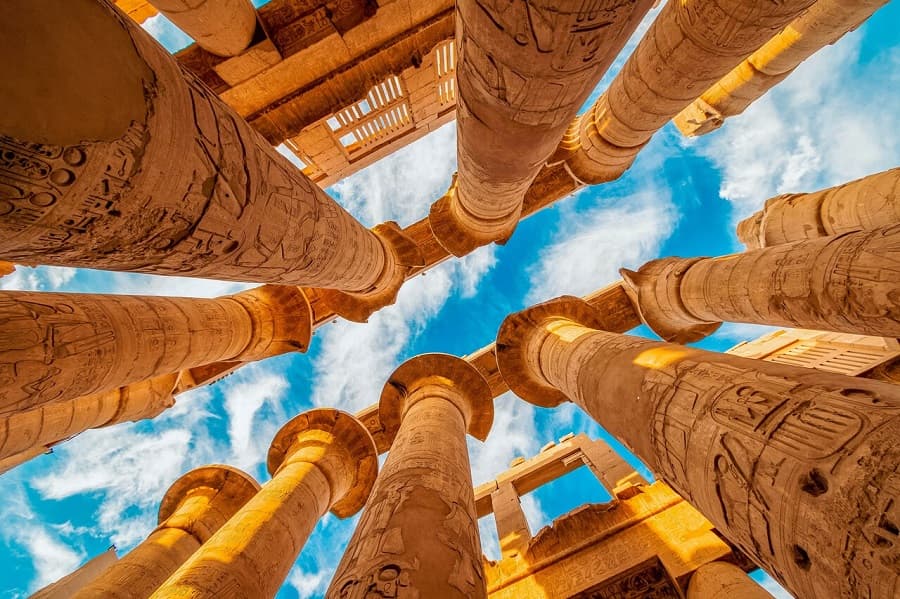
Karnak is arguably the most breathtaking temple complex on earth. Rather than a single temple, it is a massive, sprawling network of sanctuaries, obelisks, and shrines dedicated to the Theban gods. Its crowning jewel is the Great Hypostyle Hall, the largest of its kind in the world, featuring 134 colossal sandstone pillars that stretch toward the sky.
2. Luxor Temple
Located right in the heart of modern Luxor, this magnificent temple was originally commissioned by King Amenhotep III and expanded by successive pharaohs like Ramses II. In antiquity, it was connected to Karnak by the spectacular, 3-kilometer-long Avenue of Sphinxes and served as the focal point for the annual Opet Festival, where the statue of Amun-Ra was carried in a grand procession.
⚰️ The Mysteries of the West Bank
For the ancient Egyptians, the western horizon—where the sun sets—was the symbolic gateway to the afterlife. Thus, the West Bank became Egypt's grand royal necropolis.
3. The Valley of the Kings
To protect their treasures from grave robbers, New Kingdom pharaohs abandoned building pyramids and instead carved deep, hidden tombs directly into the desert rock. To date, 63 royal tombs have been discovered here. Each features descending corridors covered in vibrant, thousands-of-years-old hieroglyphs leading down to a sacred burial chamber. While access rotates to preserve the art, visitors can explore breathtaking tombs like those of Ramses VI, Seti I, and the world’s most famous pharaoh, Tutankhamun.
4. The Valley of the Queens
Situated near the kings' resting place, this necropolis was reserved for the royal wives, princes, and princesses of the New Kingdom. The undisputed highlight here is the breathtaking Tomb of Queen Nefertari, the favorite wife of Ramses II, celebrated for having some of the most beautifully preserved, vivid wall paintings in all of Egypt.
5. Tombs of the Nobles & Deir El-Medina
Tombs of the Nobles: Located in El-Qurna, these final resting places belonged to ancient viziers and high-ranking officials. While humbler than royal tombs, their detailed wall reliefs provide priceless insights into the daily, political, and domestic lives of ancient Egyptians.
Deir El-Medina (The Workers' Village): This fascinating archaeological site is the ancient village where the specialized artisans, sculptors, and laborers who built the Valley of the Kings actually lived. They even built beautifully decorated tombs for themselves, showcasing their world-class artistic skills.
👑 Spectacular Mortuary Temples on the West Bank
Unlike standard temples, mortuary temples were constructed to serve as sacred spaces for the mummification rituals of deceased pharaohs and to receive continuous offerings after their death.
6. The Temple of Hatshepsut at Deir El-Bahari
Arguably the most visually striking monument on the West Bank, this temple was built for Egypt's most successful female pharaoh, Queen Hatshepsut. It features a unique, modern-looking architectural design consisting of three massive, rising tiers with spacious terraces built seamlessly into the sheer limestone cliffs behind it.
7. Medinet Habu & The Colossi of Memnon
Medinet Habu: Built by King Ramses III, this is the largest and one of the best-preserved mortuary temples in Luxor, famous for its deep, intricately carved reliefs depicting dramatic military victories.
The Colossi of Memnon: Though the massive mortuary temple of Amenhotep III has unfortunately crumbled over the millennia, these two towering, 18-meter-high stone statues that once guarded its gateway still stand proudly by the roadside as an iconic landmark of Luxor.
🏺 The Best Museums in Luxor
To truly tie your historical journey together, a visit to Luxor’s top-tier cultural museums on the East Bank is essential:
The Luxor Museum: Inaugurated in 1975, this beautifully organized museum houses an exquisite collection of high-quality artifacts unearthed directly from local archaeological sites, displayed in an elegant, well-lit setting.
The Mummification Museum: A truly unique facility entirely dedicated to explaining the ancient, mystical art of mummification. It displays authentic ancient tools, organic materials, canopic jars used to preserve vital organs, and various mummified animals.
Plan Your Dream Luxor Itinerary with Tailored Egypt
Luxor is not simply a historical destination—it is a breathtaking journey back in time that every traveler must experience at least once. Because the city is divided by the Nile and packed with complex archaeological sites, navigating entry passes, internal transfers, and certified Egyptologist guides can be challenging to coordinate on your own.
At Tailored Egypt, we remove all the stress. We specialize in crafting premium, custom, and private itineraries designed entirely around your individual travel style.
Ready to walk through the temples of the pharaohs? Contact Tailored Egypt today to start planning your bespoke trip to Egypt!