Where is the Temple of Hatshepsut Located?
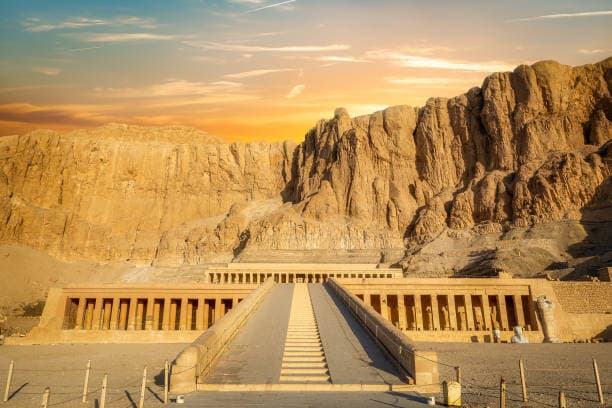
The Temple of Hatshepsut is located in Luxor’s West Bank, near the famous Valley of the Kings. It sits dramatically against limestone cliffs, blending natural rock formations with man-made terraces.
This strategic location was chosen to align with the sacred landscape of ancient Thebes, making it an essential stop on any Luxor West Bank tour.
Who Was Queen Hatshepsut?
Queen Hatshepsut was one of ancient Egypt’s most remarkable pharaohs. She ruled during the 18th Dynasty (around 1479–1458 BC) and is considered one of the most successful female rulers in history.
Unlike most queens, she declared herself pharaoh and ruled with full authority, bringing peace, trade expansion, and impressive construction projects across Egypt. Her legacy lives on most famously through her magnificent mortuary temple.
The Architecture of Hatshepsut Temple
The Temple of Hatshepsut is known locally as Djeser-Djeseru, meaning “Holy of Holies.”
Its design is unique compared to other ancient Egyptian temples:
Three massive terraced levels
Long ramps connecting each terrace
Colonnaded porticoes with perfectly aligned columns
Beautiful reliefs carved into limestone walls
The temple’s design was inspired by the nearby cliffs, creating a harmonious blend between nature and architecture. It remains one of the most symmetrical and elegant structures in ancient Egypt.
Highlights You Should Not Miss
When visiting the Temple of Hatshepsut, make sure to explore:
1. The Birth Colonnade
This section tells the divine story of Hatshepsut’s birth, emphasizing her legitimacy as pharaoh.
2. The Punt Expedition Reliefs
One of the most famous carvings shows Egypt’s trading mission to the mysterious Land of Punt, showcasing exotic goods like incense trees and gold.
3. The Chapel of Anubis
Dedicated to the god of the afterlife, this chapel features beautifully preserved wall carvings.
4. The Chapel of Hathor
Dedicated to the goddess Hathor, protector of joy and motherhood.
Why the Temple of Hatshepsut is a Must-Visit on Egypt Tours
No Egypt tour is complete without visiting this extraordinary monument. It offers:
A deep insight into ancient Egyptian religion and politics
Stunning photography opportunities against dramatic cliffs
A key stop combined with nearby attractions like the Valley of the Kings and Colossi of Memnon
A chance to explore one of the best-preserved temples in Egypt
Best Time to Visit Hatshepsut Temple
The best time to visit is early morning or late afternoon, especially during cooler months (October to April). This helps avoid midday heat while enjoying the golden sunlight that enhances the temple’s limestone beauty.
Travel Tips for Visitors
Wear comfortable walking shoes
Bring water and sun protection
Hire a licensed Egyptologist guide for deeper historical understanding
Combine your visit with a full West Bank tour in Luxor