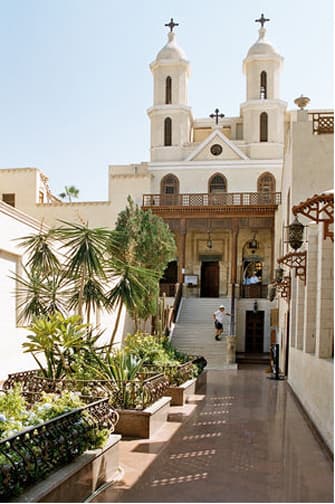
Standing above the ancient Roman Babylon Fortress, the Hanging Church offers visitors a remarkable journey through Egypt's Christian heritage while showcasing some of the finest examples of Coptic art and architecture.
Why Is It Called the Hanging Church?
The church gets its famous name because it was built above the southern gatehouse of the Roman Babylon Fortress, making it appear as if it is suspended above the ground. Visitors reach the church by climbing a staircase that leads to its elevated entrance, a feature that impressed early travelers and gave rise to the name "The Hanging Church."
A History Spanning More Than 1,600 Years
The origins of the Hanging Church date back to the 3rd or 4th century AD, making it one of the oldest churches in Egypt. Although it has undergone several restorations over the centuries, it has remained an active place of worship and an enduring symbol of the Coptic Orthodox Church.
From the 11th century onward, the church became the official residence of the Coptic Pope for several centuries. It hosted important religious ceremonies, including the selection of patriarchs, major church councils, and significant liturgical celebrations.
A Masterpiece of Coptic Architecture
The Hanging Church is celebrated for its elegant basilica design and remarkable architectural details.
Among its most impressive features are:
A beautifully crafted wooden ceiling shaped like Noah's Ark.
A magnificent marble pulpit supported by marble columns decorated with intricate mosaics.
Stunning carved wooden screens separating the sanctuary from the nave.
Elegant marble floors and beautifully decorated altars.
Peaceful courtyards that create a welcoming atmosphere for worshippers and visitors alike.
Remarkable Icons and Religious Treasures
The church houses one of Egypt's finest collections of Coptic icons. Many of these sacred artworks date back several centuries and depict Christ, the Virgin Mary, saints, and biblical scenes in the distinctive Coptic artistic tradition.
Among the church's treasures are ancient manuscripts, beautifully carved woodwork, and historical religious objects that reflect the rich spiritual heritage of Egypt's Christian community.
The Heart of Coptic Cairo
The Hanging Church is located within the historic district of Coptic Cairo, one of the oldest parts of the city. Visitors often combine their visit with nearby attractions such as the Coptic Museum, the Church of Saints Sergius and Bacchus, the Ben Ezra Synagogue, and the remains of the ancient Babylon Fortress.
Together, these monuments illustrate the remarkable religious diversity and cultural heritage that have shaped Egypt throughout its long history.
Why Visit the Hanging Church?
Whether you are interested in history, architecture, religion, or art, the Hanging Church offers an unforgettable experience. Its peaceful atmosphere, magnificent icons, and unique architectural design provide visitors with a deeper understanding of Egypt's Christian heritage.
The church also serves as a reminder that Egypt's history extends beyond the age of the pharaohs, embracing centuries of Christian and Islamic civilization that continue to enrich the country's cultural identity.
A Timeless Symbol of Faith and Heritage
For more than sixteen centuries, the Hanging Church has stood as a symbol of faith, resilience, and artistic achievement. Built above the ancient Roman fortress and filled with priceless religious treasures, it remains one of the most cherished landmarks in Egypt.
Whether you are exploring the historic streets of Old Cairo or discovering the story of Christianity in Egypt, the Hanging Church is an essential destination that beautifully reflects the country's rich spiritual and cultural legacy.