Tombs and Architecture
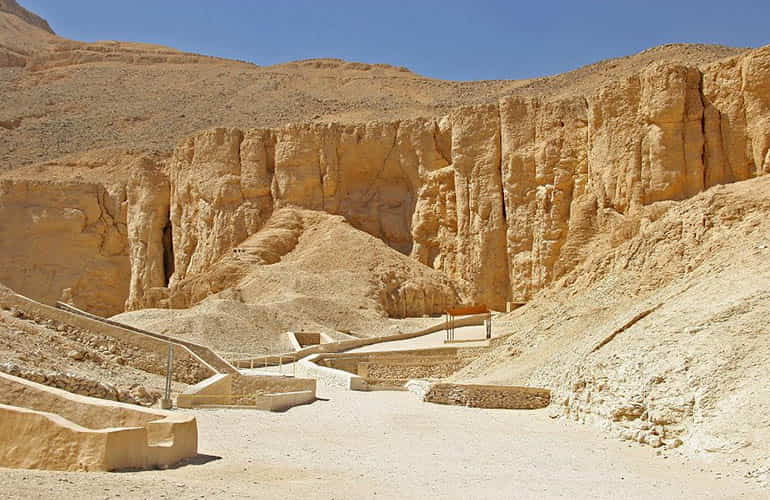
The Valley of the Queens contains more than 90 known tombs, along with several smaller burial chambers. These tombs vary greatly in size and design.
Some are simple and unfinished, while others are richly decorated with detailed religious artwork.
A typical tomb includes:
A descending entrance corridor
Small decorated chambers
A burial chamber with a sarcophagus
Wall paintings and inscriptions from religious texts
These decorations were not only artistic but also deeply spiritual, designed to protect the deceased in the afterlife.
The Tomb of Queen Nefertari (QV66)
The most famous tomb in the Valley of the Queens belongs to Queen Nefertari, the beloved wife of Pharaoh Ramesses II.
Her tomb is considered one of the most beautiful in all of Egypt. The walls are covered with vivid and colorful paintings showing her journey through the afterlife, guided by gods and goddesses.
Because of its exceptional beauty and preservation, it is often called:
“The Sistine Chapel of Ancient Egypt.”
Other Important Tombs :
In addition to Queen Nefertari, the valley contains the tombs of several other royal figures, including:
Queens such as Sitre, Titi, and Nebettawy
Sons of Ramesses II and Ramesses III
Various royal children and noblewomen
These tombs highlight the importance of the royal family and the strong religious traditions of ancient Egypt.
Religious Beliefs
The tombs of the Valley of the Queens are filled with religious symbolism. Paintings and inscriptions include scenes from the Book of the Dead and depictions of gods such as:
Osiris, god of the afterlife
Isis, goddess of magic and motherhood
Anubis, protector of tombs
Hathor, goddess of love and joy
These images were meant to ensure safe passage to the afterlife and eternal life for the deceased.
Geography and Preservation Challenges
The valley is formed from limestone and shale rock, which made it suitable for carving tombs but also vulnerable to damage.
Over thousands of years, the site has faced several natural challenges:
Flash floods that damaged tomb entrances
Salt crystals that destroyed wall paintings
Natural erosion and rock instability
Despite this, many tombs remain remarkably well preserved.
Archaeological Discoveries
Modern archaeological exploration of the Valley of the Queens began in the early 20th century. Excavations revealed beautifully decorated tombs, royal artifacts, and important inscriptions that helped historians better understand ancient Egyptian burial practices.
One of the most significant discoveries was the tomb of Queen Nefertari, which revealed an extraordinary level of artistic detail.
UNESCO World Heritage Status
In 1979, the Valley of the Queens was officially included in the UNESCO World Heritage Site “Ancient Thebes with its Necropolis.”
This recognition highlights its global importance as:
A cultural treasure
A historical archive of ancient Egypt
A masterpiece of ancient funerary art
Visiting the Valley of the Queens Today
Today, the Valley of the Queens is open to visitors traveling to Luxor. It is a quieter and less crowded alternative to the Valley of the Kings, offering a more peaceful experience.
Visitors can explore selected tombs, admire ancient artwork, and learn about the lives of Egypt’s royal women.